[id: 29]
Short description: The aim of the master thesis is to explore the possibilities of using generative text-to-image diffusion to present one and the same dataset with different emotional tones in a thematic map.
Keywords: emotions, affective design, thematic maps, Artificial Intelligence, generative text-to-image diffusion
Topic at: TU Dresden
Staff involved: Eva Hauthal (eva.hauthal@tu-dresden.de) ; Dr. Alexander Dunkel (alexander.dunkel@tu-dresden.de)
Description:
The shape of map symbols alone can cause very different affective responses; likewise, a-/symmetrical map symbols lead to associations with negative or positive map topics. Unusual color schemes in maps that do not correspond to the user's viewing habits also evoke emotional reactions. Besides shapes and colors, other means of conveying emotions are metaphors, symbols, the omission or emphasis of certain information, etc. Phenomena such as those just described involve the risk that they can be used negatively manipulative, for example for deception, misdirection, fraud or propaganda, but also positively to present information in a target group-specific, i.e. personalized way.
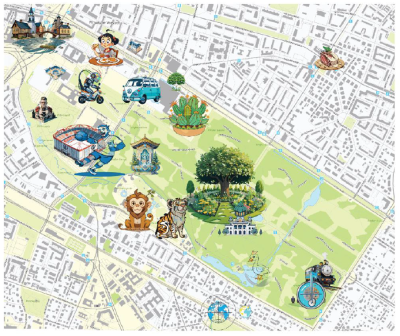
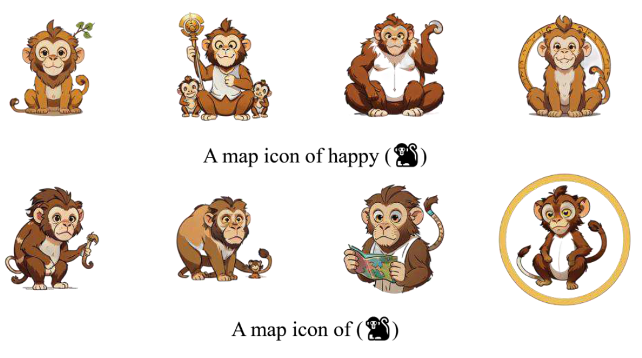
Such affective designs can be generated by various machine-learning methods, such as neural style transfer. Another approach is generative text-to-image diffusion, which does not come without limitations, but is nevertheless highly promising in the form of prompt engineering for the automatic creation of icon maps to replace labels on maps with expressive graphics. Other potential use cases for generative text-to-image diffusion are the derivation of color schemes for the reduced background maps of thematic maps.
The aim of the master thesis is to explore the possibilities of using generative text-to-image diffusion to present one and the same dataset with different emotional tones in a thematic map. Particularly suitable for this are topics that are subject to controversial debates, such as the construction of wind turbines or the establishment of asylum shelters. By addressing different fictional target groups, affective designs are to be used to promote different aims through the thematic map, e.g. convincing or appeasing doubters, encouraging opponents, confirming supporters, etc.
Literature/references: