[id: 105]
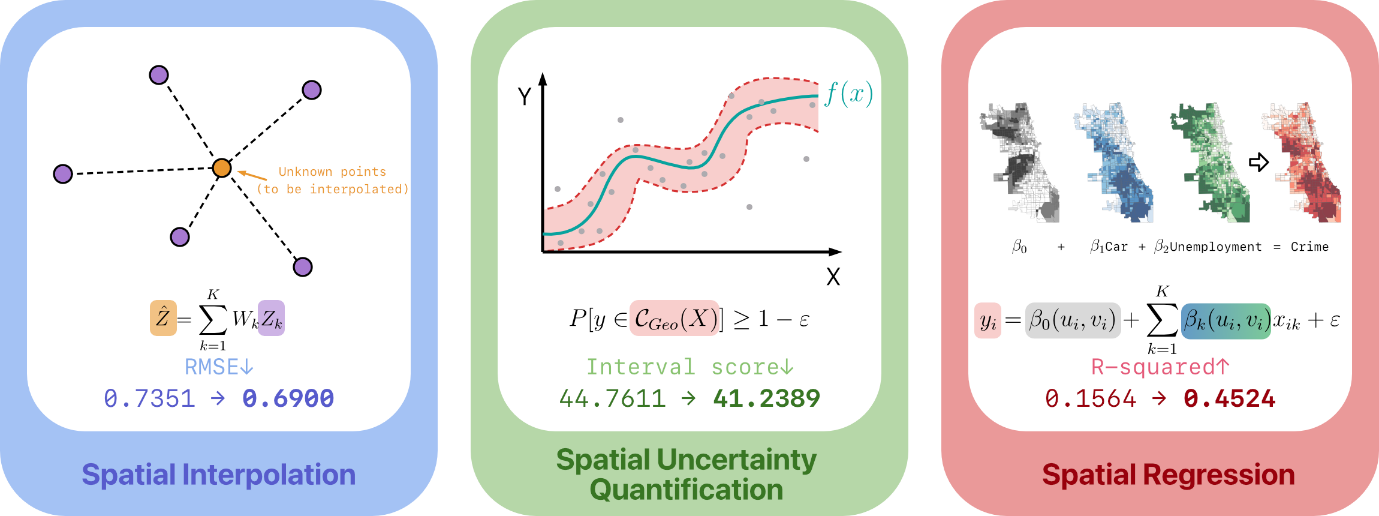
Short description: The aim of this thesis is to investigate how an LLM-driven workflow for geospatial algorithm discovery, using the Spatial Regime Model as an example, can support the generation, evaluation, and understanding of spatial analytical methods.
Keywords: Large Language Models, Algorithm Discovery, Geospatial Models, Domain Knowledge
Topic at: TU Munich
Staff involved: Xiayin Lou (xiayin.lou@tum.de)
Description:
The research will:
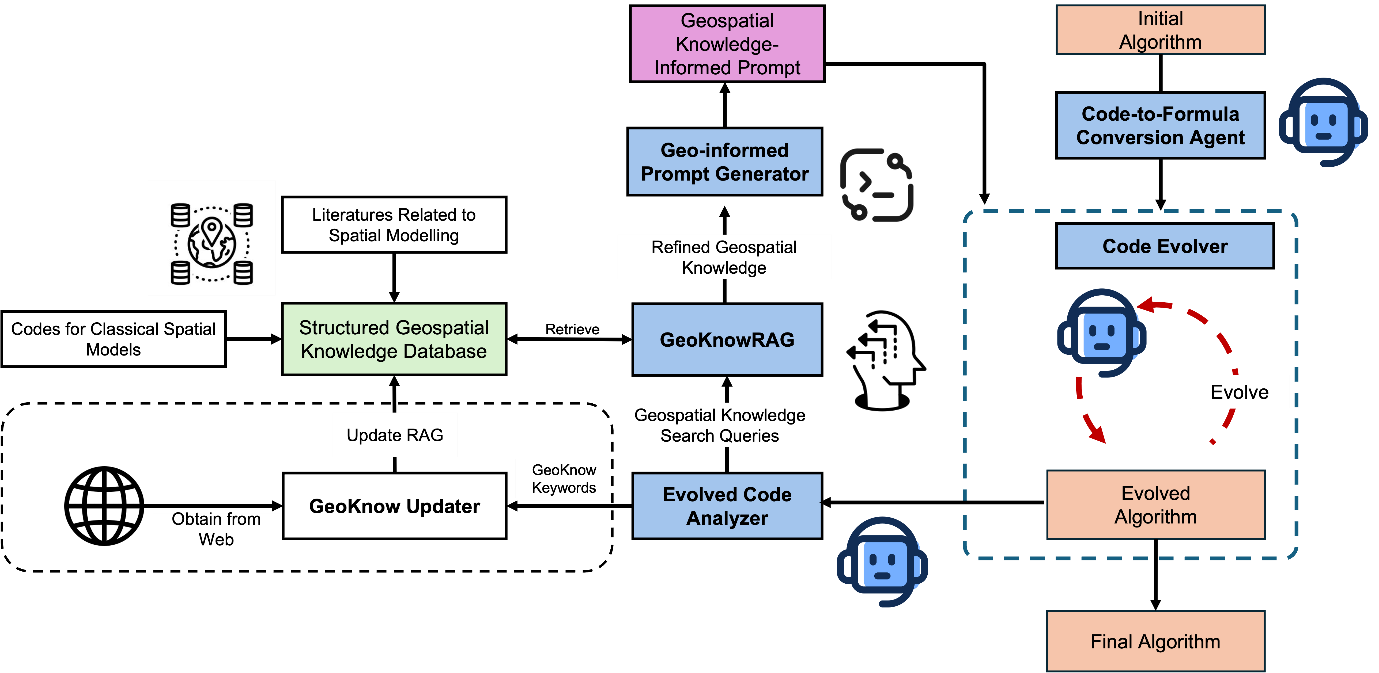
- Build an LLM-driven algorithm discovery workflow using GeoEvolve.
- Apply the workflow to generate and implement a Spatial Regime Model.
- Evaluate the generated algorithm in four key dimensions
1) Effectiveness: model correctness, stability, analytical quality
2) Efficiency: runtime, resource usage, scalability
3) Code Quality: readability, maintainability, structural correctness
4) Generalization: performance across different datasets and spatial contexts
- Additionally, the study will analyse limitations of LLM-generated algorithms.
- Derive insights from GeoEvolve about the nature of algorithm discovery in geospatial tasks.
The figure below visualizes the Workflow of Geospatial Algorithm Discovery
Literature/references: